
AI Automation: Agentic AI for Smart Business
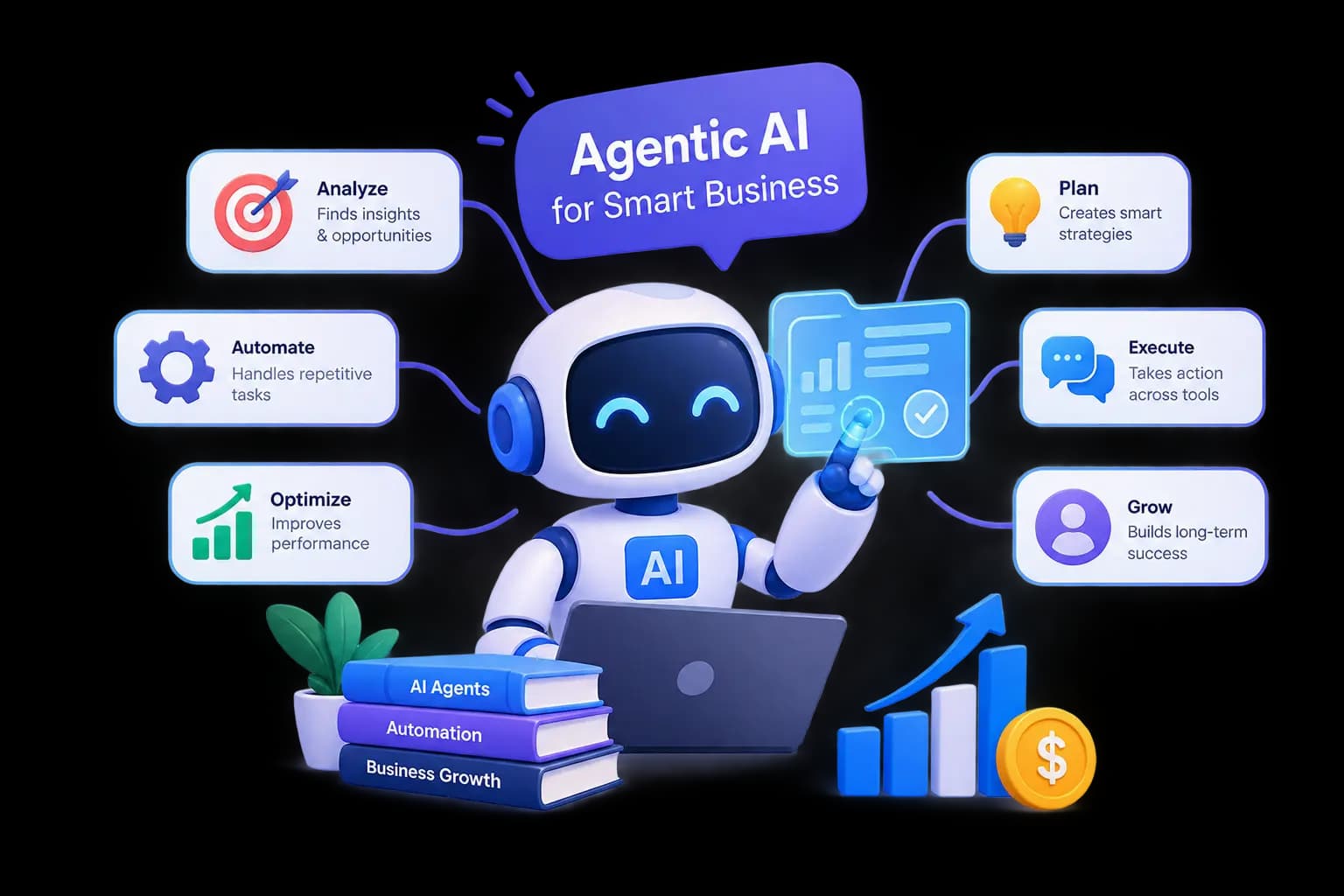
Discover how agentic AI automates decision making, augments teams, and drives faster, smarter outcomes for Indian businesses at scale.
AI Automation: Agentic AI for Smart Business
Introduction
In today’s fast-evolving market, AI is no longer a distant possibility. It is a practical tool that can automate routine tasks, enhance decision making, and free up leadership time for strategic work. For Indian business owners and decision-makers, agentic AI represents a step-change: systems that can act with initiative while aligning with your goals and policies. This article explores what agentic AI is, how it differs from traditional automation, and how to begin implementing it in a responsible, scalable manner.
What is Agentic AI?
Agentic AI refers to systems designed to act autonomously to achieve defined objectives, while still being guided by human oversight and governance. Unlike static automation that follows pre-programmed rules, agentic AI can learn, adapt, and make decisions within a scope you specify. In practice, this means automating complex processes that involve decision points, balancing trade-offs, and coordinating across teams and tools.
Key characteristics:
- Purpose-driven autonomy: AI acts to achieve measurable business outcomes.
- Contextual reasoning: It weighs options using historical data and current signals.
- Human-in-the-loop reassurance: Governance and override mechanisms ensure accountability.
- Continuous learning: Models improve as they observe outcomes and feedback.
Why Indian Businesses Should Consider Agentic AI
India’s dynamic market mix—rapid digitization, diverse customer segments, and a growing SME sector—creates a fertile ground for agentic AI to add value:
- Efficiency gains: Automate repetitive workflows such as lead qualification, invoice processing, and exception handling.
- Better decision support: AI can propose optimal pricing, staffing, and order fulfilment strategies based on live data.
- Improved customer experience: Proactively address needs with timely, context-aware interactions.
- Scale with governance: Autonomy is balanced with policy controls to protect data and compliance.
Practical Path: From Rule-based to Agentic AI
Transitioning to agentic AI doesn’t require a complete revamp of your tech stack. A practical approach focuses on three layers:
- Foundation layer
- Clean, centralized data: Ensure data quality, standard definitions, and accessible data lakes or warehouses.
- Observability: Instrument processes with event logging, metrics, and dashboards.
- Decision layer
- Objective framing: Define clear objectives, success metrics, and thresholds for automation.
- Constraints and guardrails: Build policies that reflect regulatory, ethical, and business boundaries.
- Action layer
- Orchestration: Connect AI suggestions with operational tools (CRM, ERP, ticketing, marketing automation).
- Human oversight: Establish review points for high-impact decisions and anomaly handling.
Use Cases Across Indian Industries
- Customer lifecycle automation: Lead routing, triaging, and personalized outreach across omnichannel channels.
- Supply chain and logistics: Dynamic inventory planning, demand sensing, and courier routing with real-time adjustments.
- Financial operations: Intelligent invoice processing, exception management, and cash flow forecasting.
- HR and talent: Automated candidate screening, onboarding workflows, and learning path recommendations.
Implementation Blueprint
- Pilot program
- Choose a high-impact, data-rich process with clear metrics.
- Define success criteria (cycle time reduction, uplift in conversion, error rate drop).
- Establish governance: data privacy, audit trails, and escalation paths.
- Data and model readiness
- Normalize data sources and ensure labeling for supervised tasks.
- Start with interpretable models; gradually explore more advanced architectures.
- Integration and security
- Use secured APIs and role-based access control.
- Maintain vendor controls and monitor for drift.
- Change management
- Communicate benefits and roles to teams.
- Provide training and support to ease adoption.
Challenges and Mitigation
- Data quality: Invest in data cleansing and standardization.
- Trust and transparency: Use explainable AI approaches and auditable decisions.
- Regulation and privacy: Align with local data protection norms and cross-border data transfer rules.
- Change fatigue: Roll out in incremental, well-supported steps.
Practical Takeaways
- Start small, with a well-scoped process that has measurable impact.
- Build governance first: policies, audit trails, and human-in-the-loop checks.
- Prioritize integration with existing tools to maximize value and reduce friction.
- Measure outcomes continuously and iterate on models and processes.
Roadmap for 90 Days
- Weeks 1-2: Map processes, collect data inventories, define objectives.
- Weeks 3-6: Set up data pipelines, pilot the first agentic workflow, monitor metrics.
- Weeks 7-12: Expand to a second process, refine guardrails, and document learnings.
Conclusion
Agentic AI offers Indian businesses a practical path to automate more than just tasks—it's about enabling smarter, autonomous decisions that align with your objectives and values. By combining clear governance with thoughtful integration, you can unlock faster outcomes, improved efficiency, and stronger competitiveness in a rapidly evolving market.
Takeaway Action Plan
- Identify one process with high impact and data readiness.
- Define objectives, success metrics, and safety constraints.
- Build a small, auditable autonomous workflow and monitor results.
- Scale gradually with governance and training for teams.