
Designing Web Interfaces that Drive Business Growth
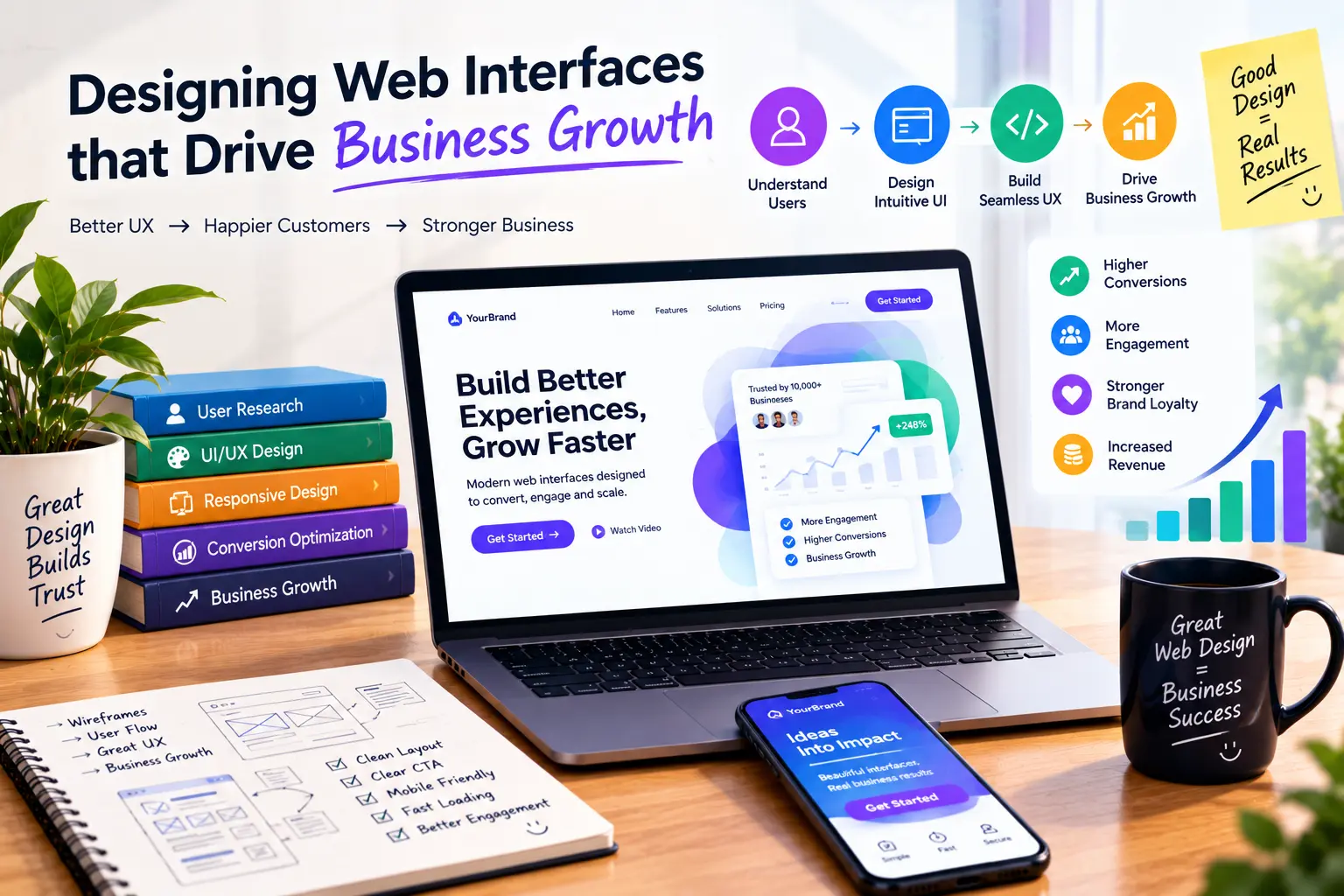
Discover practical web design strategies for Indian businesses to boost engagement, conversions, and brand credibility through user‑centric UI and fast performance.
Introduction
In today’s competitive market, a well-designed website is more than a pretty face. For Indian businesses, it is a strategic asset that can attract customers, build trust, and increase conversions. This guide shares practical web designing strategies tailored for business owners, focusing on user experience, accessibility, performance, and alignment with business goals.
Core Principles of Web Designing
User-Centric Design
Place the user at the centre of every design decision. Start with clear user journeys and map key touchpoints on your site. Use intuitive navigation, readable typography, and consistent visual language. When users find what they need quickly, they are more likely to engage and convert.
Accessibility for All
Design with inclusivity in mind. Use sufficient color contrast, scalable typography, and semantic HTML to support assistive technologies. Accessible websites not only reach a broader audience but also improve overall usability.
Performance Matters
Loading speed directly impacts user satisfaction and SEO. Optimize images, minimize scripts, use proper caching, and adopt a content delivery network (CDN) for faster delivery to Indian users across varied networks.
Mobile-First and Responsive
A vast portion of Indian traffic comes from mobile devices. Design for small screens first, then progressively enhance for larger displays. Responsive layouts, touch-friendly controls, and readable text on all devices are essential.
Brand and Content Alignment
Your design should reflect your brand values and messaging. Visuals, color schemes, and tone of content must be consistent across pages to build trust and recognition.
Practical Design Strategies for Indian Businesses
1) Clarity over Clutter
Avoid overwhelming visitors with too many options on the homepage. Highlight 2–3 primary actions such as “Request a demo,” “Shop now,” or “Learn more.” Clear CTAs guide users toward conversion paths.
2) Local Relevance
Incorporate regionally relevant content, currencies, and contact information. Use Indian payment options where applicable and showcase testimonials from local customers to build credibility.
3) Fast, Readable Content
Use short paragraphs, bullet lists, and scannable headings. India’s diverse audience consumes content in varied bandwidth environments; concise, well-structured content improves readability and retention.
4) Trust Signals
Display client logos, case studies, and security badges prominently. A visible privacy policy and clear refund terms reduce friction in the conversion funnel.
5) Visual Hierarchy and Rhythm
Create a clear visual hierarchy with typography, color accents, and spacing that guide the eye. Consistent rhythm across pages helps users predict where to find information.
6) Forms That Respect Time
Keep forms short. Use smart defaults, inline validation, and progressive disclosure to minimize user effort. A well-designed form experience reduces drop-offs.
7) SEO-Ready from Day One
Structure pages with semantic HTML, proper heading order, and descriptive alt text. Fast, accessible sites tend to rank better and deliver a better user experience.
Practical Takeaways and Checklists
- Audit your homepage for 3 clear actions and a strong value proposition.
- Ensure mobile usability with touch-friendly controls and legible type at 16px or larger on phones.
- Optimize images for web without compromising quality; aim for modern formats like WebP when possible.
- Test across devices and network conditions common in India, including 2G/3G environments.
- Use analytics to identify the top pages and drop-off points; iterate on design based on data.
- Implement an accessible navigation structure with ARIA labels and logical focus order.
Case Studies: Practical Applications
Case Study A: Local Manufacturer
A small manufacturing business revamped their product pages with a concise hero section, 2-step product inquiry, and a trust section featuring local testimonials. Results: 28% increase in form submissions and 15% boost in average session duration within eight weeks.
Case Study B: Regional E-Commerce Startup
The startup simplified checkout flows, added guest checkout, and localized payment options. Performance optimizations reduced page load time from 4.5s to 1.9s on average in India. Result: 22% higher cart completion rate in the first month.
Next Steps for Your Website
- Define your primary user personas and map top journeys.
- Audit your site for accessibility and mobile performance.
- Create a 6-week design sprint focusing on 2–3 high-impact changes.
- Measure impact with clear KPIs: time on page, bounce rate, and conversion rate.
- Establish a routine for ongoing design updates aligned with business goals.
Conclusion
Web design is a strategic function in business growth. By prioritizing clarity, local relevance, speed, and accessibility, you can deliver an experience that delights users and drives measurable results for your Indian audience.