
Digital Transformation: Practical Steps for Indian Businesses
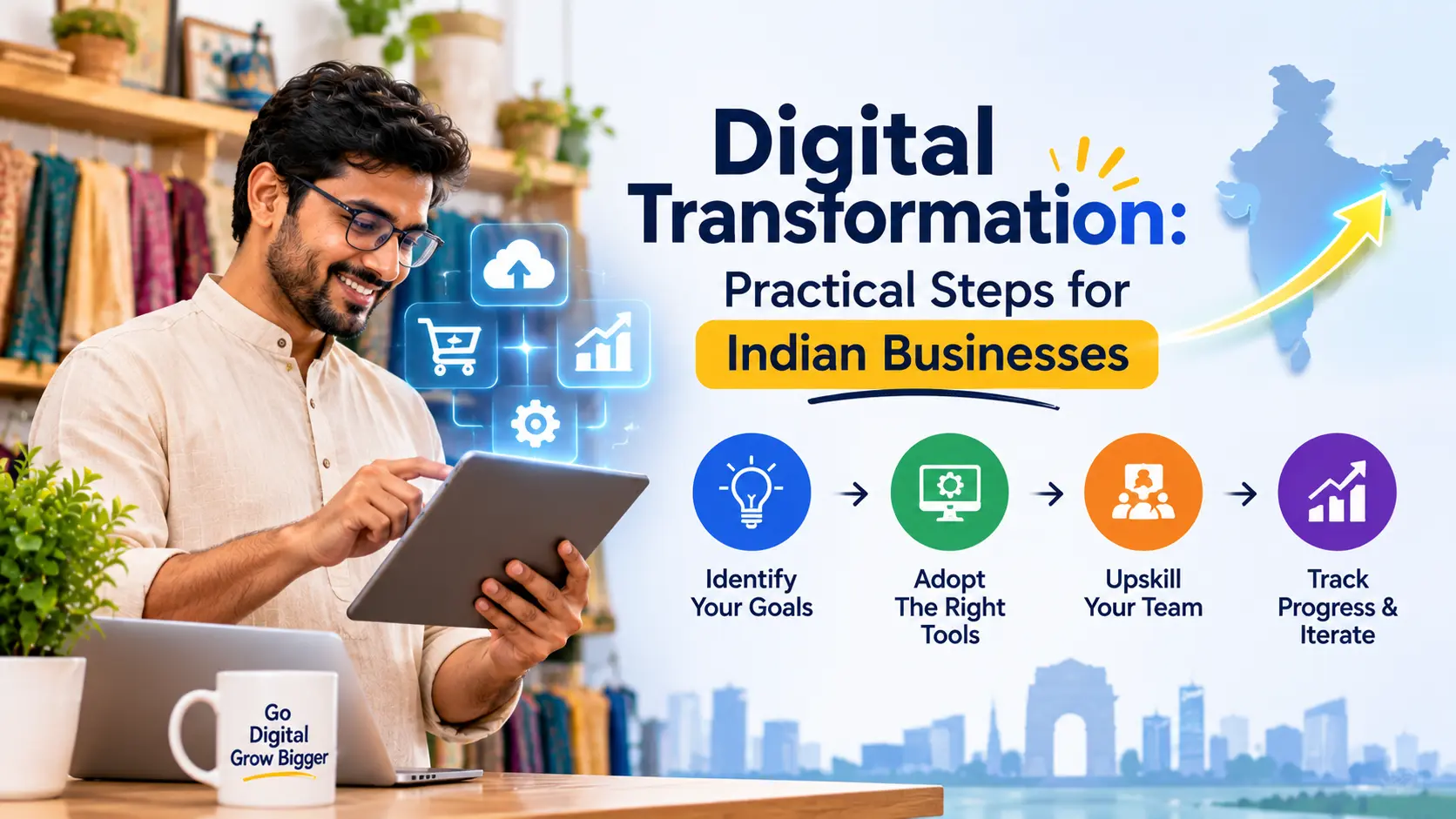
Discover practical, budget-friendly ways for Indian business owners to drive digital transformation with clear goals and measurable outcomes.
Introduction
Digital transformation is not a luxury; it is a necessity for Indian businesses seeking sustainable growth. This guide offers practical, budget-conscious steps to modernize processes, harness data, and improve customer experiences. You will find actionable, repeatable methods that small and mid-sized enterprises can implement with limited resources.
Why digital transformation matters in India
India presents a vibrant market with rapid adoption of mobile and online services. Yet many firms struggle with legacy systems, fragmented data, and limited IT budgets. Digital transformation helps you streamline operations, reduce costs, and unlock new revenue streams. The goal is not to replace people but to empower them with better tools and clearer processes.
Assessing readiness
Start with a realistic assessment of people, process, and technology.
- People: Map roles, skills, and change readiness. Identify champions in each department who can lead adoption.
- Process: Document current workflows and identify bottlenecks where automation can save time.
- Technology: Inventory existing tools, data sources, and security controls. Prioritize open standards and scalable solutions.
Create a simple scorecard to rate readiness across these dimensions. A clear picture helps you decide where to start and how to measure progress.
Prioritizing projects
Not all initiatives deserve equal weight. Focus on high-impact, low-friction projects first.
- Quick wins: Automate repetitive tasks, standardize data entry, and consolidate approvals.
- Data centralization: Create a single source of truth for key metrics to enable better decisions.
- Customer experience: Improve online discovery, self-service, and post-sale support.
Use a two-by-two matrix (impact vs. effort) to select projects. Start with 1–2 initiatives that are easy to implement but deliver tangible value within 90 days.
Building capabilities
Invest in capabilities that enable sustainable transformation.
- Digital backbone: Adopt scalable cloud services and open integrations to connect tools.
- Data literacy: Train teams to read dashboards, interpret metrics, and make data-driven decisions.
- Automation: Implement process automation for repetitive tasks using low-code platforms where appropriate.
Develop a lightweight governance model to manage changes, security, and data quality without slowing momentum.
Change management and culture
Technology alone won’t transform your business. People and culture are central.
- Communicate the vision: Explain why transformation matters and how it benefits employees and customers.
- Involve users early: Gather feedback during pilots and adjust quickly.
- Recognize and reward: Acknowledge teams that adopt new tools and demonstrate progress.
Create a feedback loop with regular check-ins and quick iterations to maintain momentum and morale.
Practical playbook for small and mid-sized businesses
- Define a 90-day transformation plan with 3 concrete projects.
- Set measurable outcomes: time saved, error reduction, or customer satisfaction scores.
- Choose interoperable tools: Favor cloud-first, scalable, and standards-based solutions.
- Establish data governance: Basic policies for data quality, privacy, and access.
- Pilot, learn, and scale: Start small, capture learnings, and expand successful initiatives.
- Partner with trusted providers: Seek vendors with local support and clear roadmaps for SMBs.
This playbook helps you maintain focus, avoid scope creep, and demonstrate value quickly to stakeholders.
Practical takeaways
- Start with 3 high-impact, low-effort projects and measure outcomes.
- Create a single source of truth for critical metrics to guide decisions.
- Invest in people: training, change champions, and open communication.
- Favor open standards and scalable cloud solutions to protect future needs.
- Build a governance framework that balances risk with speed of execution.
Conclusion
Digital transformation is an ongoing journey—one that requires disciplined planning, strong leadership, and a culture that embraces change. By starting with actionable projects, aligning teams, and focusing on measurable outcomes, Indian businesses can unlock efficiency gains, improve customer experiences, and sustain growth in a competitive landscape.