
Essential Modern Web Development for 2026
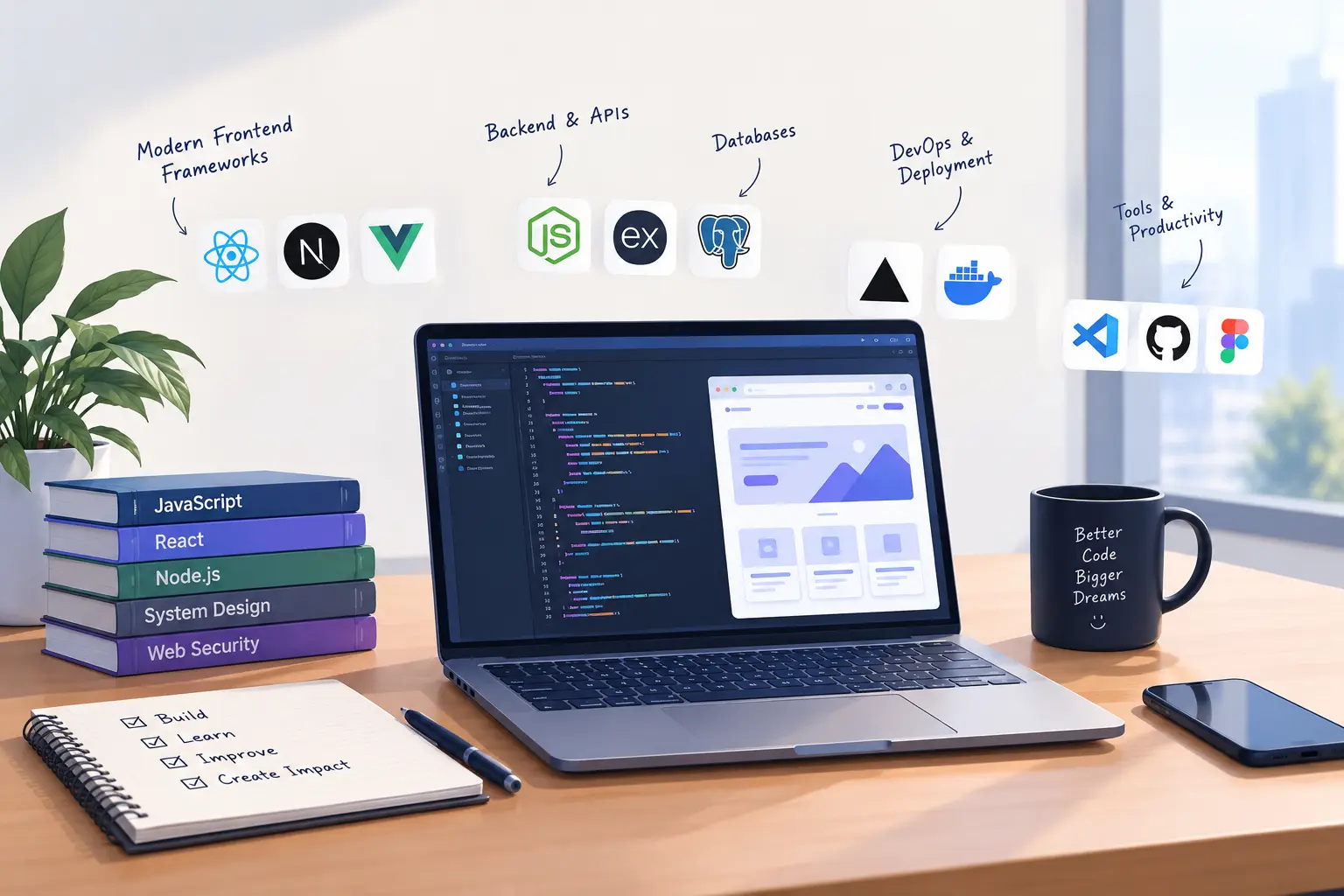
Discover practical strategies for modern web development in 2026, from performance tuning to accessible design, ideal for Indian business owners building online success.
Introduction
In 2026, web development continues to evolve rapidly. For business owners in India, the focus is on delivering fast, secure, and accessible experiences that convert visitors into customers. This guide distills practical, implementable strategies for building robust web apps and sites that perform well across devices and networks, while staying aligned with business goals.
Key Trends
Web development today is shaped by performance-first thinking, modular architectures, and accessibility as a baseline. Progressive enhancement, server-driven UI, and smarter use of client-side frameworks help teams move quickly without compromising reliability. For Indian businesses, the emphasis is on cost-effective hosting, scalable APIs, and resilient front-ends that handle intermittent connectivity.
Practical Architectures
A sound architecture starts with clear separation of concerns and a measurable roadmap.
Frontend Considerations
- Prefer a lean bundle by code-splitting and on-demand loading. This improves initial render times, especially on slower mobile networks common in many regions.
- Use a component library with accessibility in mind, ensuring good keyboard navigation and screen reader support.
- Implement responsive design that gracefully degrades on older devices without breaking core functionality.
Backend and APIs
- Adopt a layered API approach: a stable, well-documented REST or GraphQL layer backed by a service layer that encapsulates business logic.
- Introduce caching at multiple layers (edge, server, client) to reduce latency and API load.
- Consider server-side rendering or hybrid SSR/CSR for critical pages to boost perceived performance.
Data and Security
- Enforce strong authentication and authorization, with role-based access controls aligned to your business model.
- Use rate limiting and input validation to prevent abuse and ensure data integrity.
- Plan for data privacy and compliance in line with local regulations, including data localization where applicable.
Performance and Accessibility
Performance and accessibility go hand in hand; fast, accessible sites reach more users and convert better.
Performance Best Practices
- Optimize images with modern formats (AVIF/WebP) and implement lazy loading for offscreen assets.
- Minimize critical rendering path by inlining essential CSS and deferring non-critical JS.
- Use a content delivery network (CDN) and edge caching to reduce latency for users across India and nearby regions.
Accessibility as a Feature
- Ensure semantic HTML and ARIA labels where needed, with clear focus states for keyboard users.
- Provide text alternatives for all media and maintain sufficient color contrast for readability.
- Test with assistive technology and gather feedback from a diverse user base to iterate improvements.
Code Practices for Teams
Consistent, maintainable code accelerates delivery and reduces defects.
Development Workflow
- Establish a strong CI/CD pipeline with automated tests, linting, and performance budgets.
- Use feature flags to roll out changes safely and to gather early feedback from stakeholders.
- Maintain a single source of truth for design tokens and UI components to ensure consistency across pages.
Quality and Testing
- Write unit, integration, and end-to-end tests that reflect real user journeys.
- Include accessibility tests as a core part of the test suite, not an afterthought.
- Measure performance continuously and set targets for LCP, CLS, and TBT, with dashboards accessible to all stakeholders.
Team Enablement and Process
People and process drive successful web projects as much as technology.
Build a Strong Internal Capability
- Invest in regular knowledge sharing: short sessions on new APIs, tooling, and best practices.
- Create a playbook of common patterns and anti-patterns so new developers can onboard quickly.
- Align engineering goals with business outcomes: faster time-to-market, better retention, and higher conversion rates.
Collaboration with Stakeholders
- Involve marketing, product, and support early in feature discussions to surface potential issues and expectations.
- Use data-driven decision making: baseline metrics, experiments, and clear success criteria.
- Document decisions and rationale to reduce ambiguity and rework.
Practical Takeaways
- Start with a performance-first mindset and plan for progressive enhancement from day one.
- Choose a scalable architecture that supports modular growth and clear API boundaries.
- Prioritize accessibility as a non-negotiable requirement, not a checkbox item.
- Build a robust testing and deployment process with visibility for stakeholders.
- Foster a learning culture that values rapid experimentation and continuous improvement.
Conclusion
Web development in 2026 for Indian businesses means balancing speed, reliability, and inclusivity with cost efficiency. By combining performance optimization, accessible design, modular architectures, and strong team processes, you can deliver digital experiences that drive growth and competitive advantage. Remember, the best websites are not just fast and pretty; they are resilient, inclusive, and aligned with your business goals.