
Harnessing AI Automation for Small Business Growth
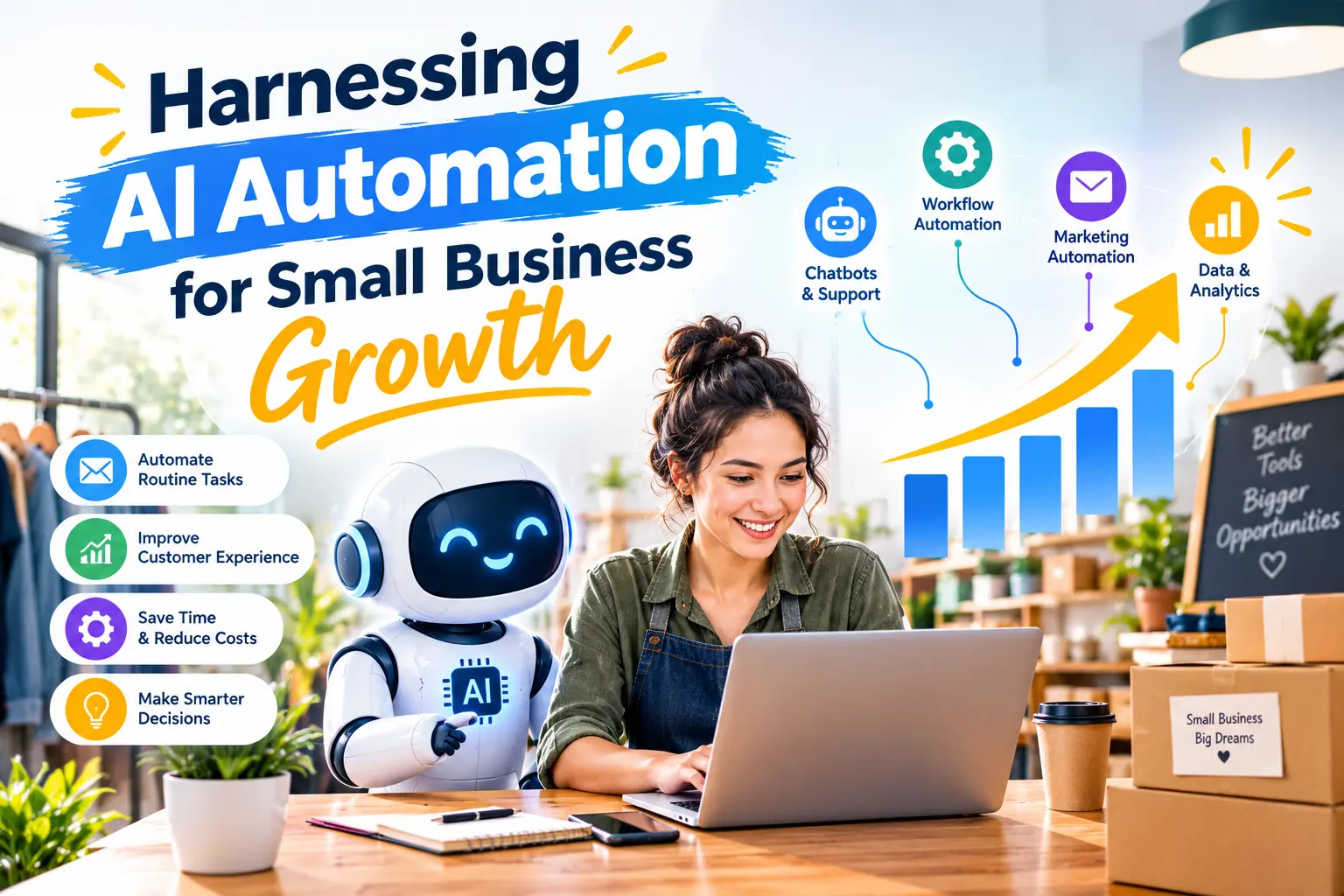
Discover practical AI automation strategies to streamline operations, delight customers, and drive sustainable growth for small businesses.
Introduction
In today’s competitive landscape, small business owners can no longer ignore the power of AI. When implemented thoughtfully, AI automation helps you scale operations, free up your time, and deliver consistently better customer experiences. This guide offers practical, India-friendly approaches to leverage AI without breaking the bank.
Why AI automation matters for small business
AI automation can handle repetitive tasks, extract insights from data, and support decision-making. For Indian SMEs, it translates into faster response times, reduced errors, and more time to focus on strategic growth. The goal is to automate the right processes, not every task, to maximize return on investment.
Practical strategies to get started
1) Automate customer support with AI chatbots
An AI chatbot can handle common queries 24/7, freeing your human agents for complex issues. Start with FAQs, order tracking, and returns. Use a chatbot that can escalate to a human when needed and collect context to reduce repeat questions in subsequent interactions.
2) Streamline appointment scheduling and operations
Automated booking systems reduce no-shows and manual back-and-forth. Integrate calendar availability, reminders, and follow-ups. For service businesses, automation can manage confirmations, rescheduling, and post-visit feedback.
3) Leverage AI for data-driven decision making
Small businesses often have data scattered across tools. Use lightweight AI tools to unify data, generate dashboards, and surface insights like best-selling products, peak season demand, or customer lifetime value. Start with a clear question and test with a small dataset.
4) Personalize marketing at scale
AI can segment audiences, tailor messages, and optimize campaigns with minimal manual effort. Begin with email automation, personalized product recommendations, and retargeting ads. Ensure privacy compliance (consent, data minimization) and avoid over-personalization that feels intrusive.
5) Automate invoices, payments, and cash flow alerts
Automated invoicing and payment reminders reduce late payments. Pair it with AI-driven cash flow forecasting to anticipate shortfalls and trigger proactive actions like revised payment terms or supplier negotiations.
Implementation blueprint
Step 1: Map your workflows
Document top 5 processes that are repetitive or time-consuming. Note inputs, outputs, people involved, and current pain points. This map will guide where to apply AI without disrupting critical operations.
Step 2: Choose the right tools
For Indian SMEs, start with integrated, affordable tools that fit your tech stack (CRM, helpdesk, calendar, invoicing). Look for AI features like chatbots, automation workflows, and simple predictive analytics. Prioritize tools with local support and easy onboarding.
Step 3: Pilot with a narrow scope
Pick one process (e.g., customer support) and run a 4-6 week pilot. Define success metrics (response time, resolution rate, customer satisfaction). Gather feedback from staff and customers to refine the setup.
Step 4: Automate, measure, optimise
Automate the approved process, establish dashboards, and review performance weekly. Iterate on prompts, templates, and escalation rules. Maintain a human-in-the-loop for quality control and exceptions.
Step 5: Scale thoughtfully
After a successful pilot, extend automation to adjacent processes. Reassess data quality, governance, and security. Build a playbook to onboard new teams and train staff.
Practical takeaways
- Start with high-volume, low-complexity tasks to realize quick wins.
- Focus on the customer journey and how AI can reduce friction at touchpoints.
- Maintain human oversight for critical decisions and ensure ethical use of data.
- Invest in data basics: clean data, integrated systems, and simple dashboards.
- Plan for change management; communicate benefits and provide hands-on training.
Common pitfalls and how to avoid them
- Over-automation: Automate only what adds measurable value and can be audited.
- Poor data quality: AI decisions rely on good data. Invest in data hygiene first.
- Hidden costs: Consider ongoing subscription fees, integration effort, and maintenance.
- Security gaps: Use role-based access, encryption, and compliant data handling.
Case study snapshot
A mid-sized Indian retailer implemented a chatbot for order tracking and a simple invoicing automation. Within two months, average response time to customer queries dropped by 40%, and automated reminders reduced late payments by 25%. The business saved 12 hours weekly in admin tasks, which were redirected to sales and customer engagement.
Takeaway action plan
- Choose one customer-facing process to automate in the next 30 days.
- Set clear success metrics (e.g., response time, error rate, cash flow forecast accuracy).
- Pilot with a reputable, affordable tool and appoint a go-to person for governance.
- Review results and prepare a scale plan with senior leadership.
Conclusion
AI automation is a practical ally for small businesses in India. By starting small, focusing on measurable impact, and maintaining human oversight, you can unlock efficiency, enhance customer experiences, and drive sustainable growth. Embrace experimentation, learn from each iteration, and scale with confidence.