
Mastering Modern Web Development: Practical Guide
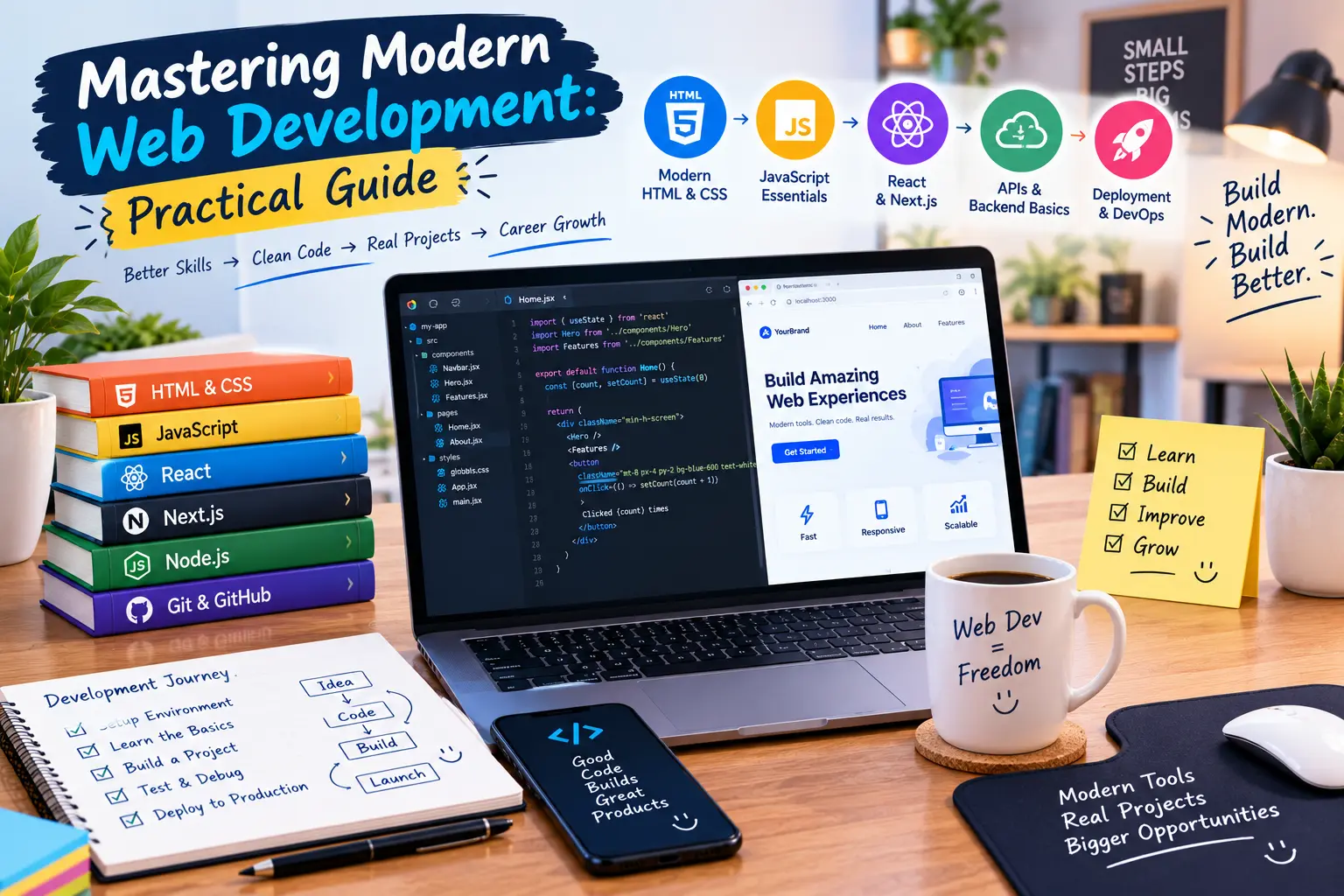
A practical, actionable guide for business owners to build robust, scalable web apps with modern tools, workflows, and performance-first mindset.
Introduction
Web development evolves rapidly, and staying current is crucial for business success. This guide offers practical, field-tested steps to build robust and scalable web apps that perform well, resists common failures, and delivers value to users. It targets business owners, entrepreneurs, and decision-makers who want clear, actionable paths without getting lost in jargon.
Define Goals and Requirements
Before writing a line of code, clarify the business objectives. Ask: What problem are we solving? Who benefits most? What are the must-have features and the nice-to-haves? Create a lightweight requirements document and a prioritised roadmap. This helps avoid scope creep and keeps the team focused on outcomes rather than shiny technologies.
Choose a Modern Tech Stack
A practical stack balances developer productivity with long-term maintainability. Consider:
- Frontend: React, Vue, or Svelte for interactive interfaces; TypeScript for type safety.
- Backend: Node.js with Express or NestJS, or Python with FastAPI for clean APIs.
- Database: PostgreSQL for relational data; a caching layer like Redis when needed.
- Deployment: containerisation with Docker; orchestration with Kubernetes or simpler cloud-native options.
Pick components that your team already understands or can ramp up on quickly. Focus on well-supported libraries, clear documentation, and a predictable upgrade path.
Architecture and APIs
Aim for a clean API-first approach. Design RESTful or GraphQL endpoints with clear contracts. Use versioning and consistent error handling. Separate concerns with a modular architecture: frontend, API, and data layers should evolve independently
- Define data models once and reuse across services.
- Use API gateways or aggregates to limit client coupling to backend changes.
- Implement rate limiting, authentication, and logging at boundaries.
Performance from Day One
Performance should not be an afterthought. Implement these practical steps:
- Measure early: establish baseline metrics using Lighthouse, WebPageTest, and real-user monitoring.
- Optimize critical rendering path: compress assets, defer non-critical scripts, and inline essential CSS.
- Use caching strategically: server-side caching for frequent queries; CDN caching for static assets.
- Optimize images: use modern formats (WebP, AVIF) and proper sizing.
Regularly profile the app and carry out budgeted optimization sprints. It is cheaper to optimize early than to refactor later.
Responsive Design and Accessibility
Your product must work for all users and devices. Invest in:
- Fluid layouts, flexible images, and breakpoints that reflect real-world usage.
- Accessible components: semantic HTML, proper focus management, and keyboard navigation.
- A11y testing as part of the development cycle, not as a separate task.
Accessible design expands your potential audience and reduces legal and reputational risk.
Security Basics for Small Teams
Security is everyone's job. Start with:
- Strong authentication: minimal viable MFA where feasible; consider OAuth providers for simplicity.
- Secure by default: treat all public endpoints as potentially hostile; validate inputs and use prepared statements.
- Regular updates and dependency checks: automate vulnerability scanning and updates.
Create a simple incident response plan and practice it with the team so you can respond quickly when something goes wrong.
Deployment and DevOps Practicalities
Keep deployment predictable and recoverable:
- Use a CI/CD pipeline to automate builds, tests, and deployments.
- Maintain infrastructure as code for reproducibility.
- Implement blue-green or canary deployments to reduce downtime.
Document deployment steps and rollback procedures; this knowledge must live with the code, not only in people’s heads.
Data Strategy and Compliance
Data strategy should align with business goals:
- Define data ownership and lifecycle: creation, use, retention, and deletion.
- Establish privacy controls and consent management where needed.
- Keep a simple, auditable trail for compliance with local regulations.
Practical Takeaways
- Start with a clear goal and an MVP path; avoid premature optimization.
- Choose a predictable, maintainable stack and adhere to API contracts.
- Prioritise performance and accessibility from day one.
- Build security, CI/CD, and data governance into routine practices.
Roadmap for Teams
- Create a concise tech charter for the project; 2) Establish baseline performance and accessibility targets; 3) Implement a minimal yet robust API layer; 4) Set up a repeatable deployment process; 5) Schedule regular reviews to adjust priorities.
Conclusion
Web development is not just about technology; it is about delivering reliable value for users and the business. By following these practical steps, teams can ship robust, scalable, and accessible apps that meet real-world needs while staying adaptable to future changes.
Practical Next Steps
- Audit your current stack and identify 2-3 low-friction improvements.
- Define a lightweight API contract and create a sample endpoint.
- Set up performance monitoring and accessibility checks as part of your sprint rituals.
- Draft a basic security baseline and assign ownership for ongoing vigilance.