
Axione Solutions logo
Google Ads

Maximize Google Ads ROI for Indian Businesses

10 September 2026Read Time: 9 min
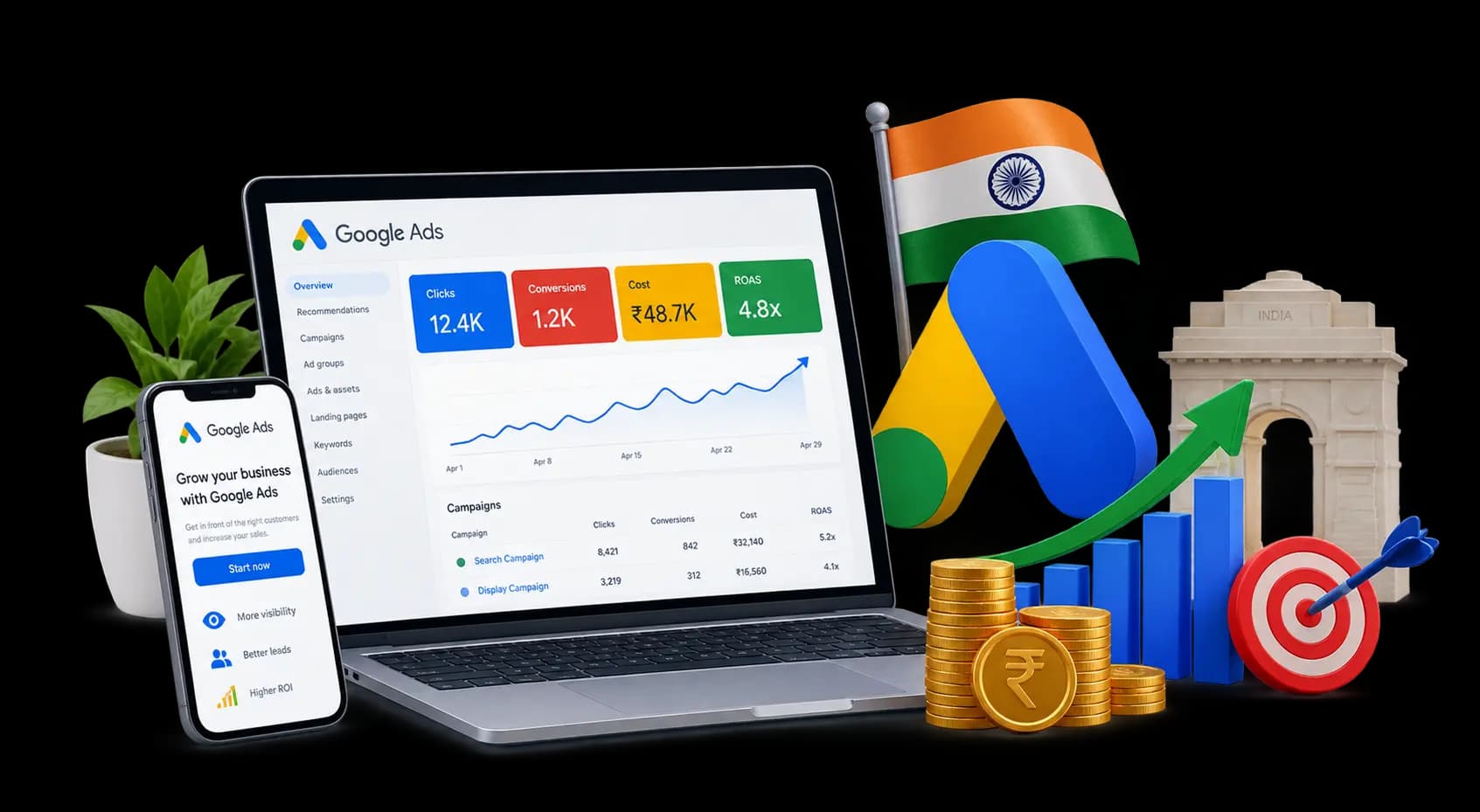
Maximize Google Ads ROI for Indian Businesses

Unlock practical, cost-effective strategies to boost Google Ads performance for Indian businesses, focusing on ROI, keyword structure, and tailored ad messaging.

Introduction\nGoogle Ads can be a powerful engine for growth when you tailor campaigns to Indian markets, budgets, and buyer journeys. This guide offers practical, implementable steps to improve ROI, from structure to messaging and bidding. It’s written for business owners and decision-makers who want tangible results without complexity.\n\n## Understanding Your Objective and Budget\nBefore you dive into keywords and ad copies, clarify your primary objective. Is it leads, calls, sales, or brand awareness? Align your budget with a measurable target. In India, cost-per-click can vary widely by industry, device, and region. Start with a small, controlled test, then scale what works.\n\n### Set Specific Goals\n- Define target CPA or ROAS based on historical data or industry benchmarks.\n- Decide on a daily or monthly budget cap with room for learning.\n- Establish key metrics: CTR, conversion rate, average order value, and lifetime value.\n\n## Structure for Success: Campaigns, Ad Groups, and Keywords\nA clean, logical structure helps you manage bids, budgets, and performance more efficiently. Organize by product line, geography, or intent, not by rough guesses.\n\n### Campaign Design\n- Use separate campaigns for Search, Shopping, and Performance Max if applicable.\n- Create geo-targeted campaigns for major Indian metros and tier-2 cities where your demand exists.\n- Layer seasons and promotions into schedules or audience signals.\n\n### Ad Group Segmentation\n- Group keywords by intent: informational, navigational, transactional.\n- Maintain tight ad group keyword lists (5–20) to keep relevance high.\n- Use negative keywords to prune irrelevant traffic, saving budget for high-intent terms.\n\n### Keyword Strategy for Indian Markets\n- Prioritize long-tail keywords in regional languages if relevant to your audience.\n- Focus on buyer-intent phrases related to your product or service.\n- Monitor search terms report to capture new high-converting phrases and add them as keywords.\n\n## Crafting Ads: Relevance, Clarity, and Value\nYour ads should speak directly to your audience’s needs, offer a clear value proposition, and invite action. Localized messaging can improve resonance.\n\n### Copy Guidelines\n- Headline: include product name, benefit, and a call to action (CTA).\n- Description: explain the benefit in 1–2 lines, mention price or offer if compelling.\n- Display Path: hint at your category or solution.\n\n### Ad Extensions to Boost Performance\n- Sitelink extensions to showcase different products or promotions.\n- Call extensions for quick operator contact, especially in service industries.\n- Location extensions to drive foot traffic in local markets.\n- Structured snippets to highlight features or services.\n\n## Bidding and Budget Optimization\nEffective bidding balances cost with conversion potential. Start with automated bidding to leverage Google’s algorithms, then refine manually as you gain data.\n\n### Bidding Strategies to Consider\n- Target CPA to maintain a consistent cost per conversion.\n- Target ROAS if you can quantify revenue per conversion.\n- Maximize conversions with a controlled budget during learning phases.\n\n### Bid Management Tips\n- Schedule bids to align with peak search times in your market.\n- Use device bid adjustments if mobile search dominates your traffic.\n- Monitor impression share and adjust budgets to protect top positions for high-value terms.\n\n## Tracking, Measurement, and Attribution\nWithout robust measurement, you can’t prove ROI. Implement clean conversion tracking and a sensible attribution model.\n\n### Setup Essentials\n- Install Google Analytics and connect to Google Ads.\n- Define conversions for key actions: purchases, form submissions, calls, or newsletter sign-ups.\n- Use UTM parameters on all non-Google traffic to attribute accurately.\n\n### Attribution Models\n- For e-commerce, consider position-based or data-driven attribution to reward all touchpoints.\n- For lead generation, time-decay models can highlight recent interactions.\n\n## Testing and Learning Loop\nTesting is your path to sustainable improvement. Run small, disciplined experiments and scale winners.\n\n### A/B Testing Focus Areas\n- Ad copy variations emphasizing different benefits.\n- Landing page headlines and CTAs.\n- Keyword match types and negative keyword lists.\n\n### Learnings to Implement\n- Pause underperforming keywords quickly.\n- Increase budgets on high-ROI terms after confirming consistency.\n- Refresh ad creatives every 6–8 weeks to combat ad fatigue.\n\n## Landing Page Alignment for Higher Conversions\nA winning ad can still fail if the landing page isn’t relevant or trustworthy. Ensure message alignment, fast loading times, and a clear conversion path.\n\n### Page Optimization Tips\n- Match the landing page headline to the ad’s promise.\n- Keep forms short; request only essential details.\n- Improve page speed, especially on mobile.\n- Use social proof: testimonials, client logos, case studies.\n\n## Practical Takeaways\n- Start with a focused, well-structured campaigns setup, then optimize iteratively.\n- Invest in high-intent, long-tail keywords and prune the rest with negative keywords.\n- Localize ads for Indian markets and test regional language variants where appropriate.\n- Prioritize measurable objectives and track every conversion with clean data.\n- Use automated bidding to leverage Google’s learning, then refine with manual adjustments as data grows.\n- Align landing pages with ad promises to improve quality score and conversions.\n\n## Conclusion\nGoogle Ads can drive meaningful growth for Indian businesses when you blend structure, relevant messaging, and disciplined measurement. With a steady loop of testing, learning, and optimization, you can achieve a strong ROI and sustainable scale.\n