
Maximize ROI with Google Ads: A Practical Guide
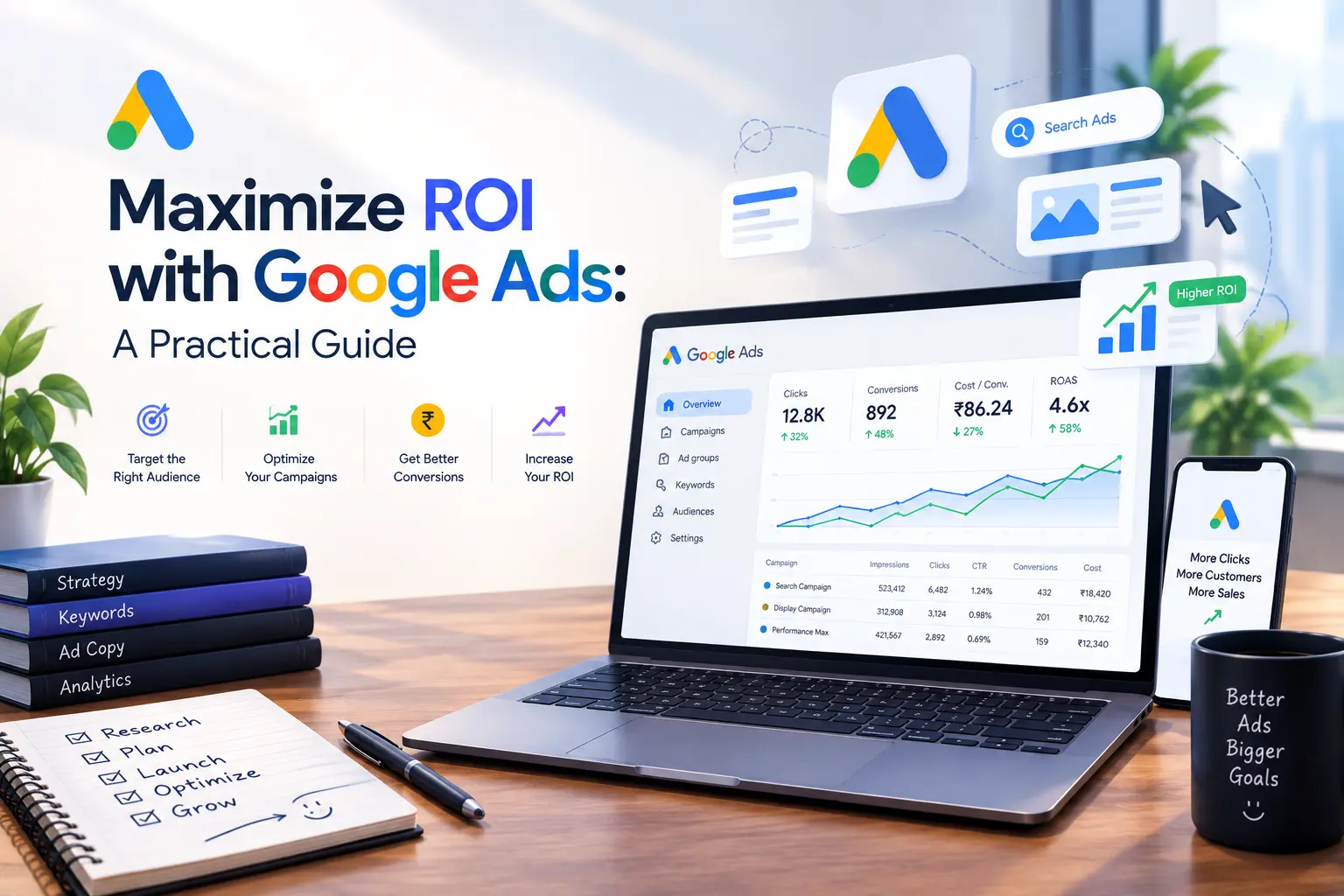
Unlock practical strategies to boost conversions, reduce waste, and scale your Google Ads campaigns for measurable, sustainable ROI.
Introduction
Google Ads can be a powerful engine for growth when you optimise for conversions, not just clicks. This guide provides practical steps tailored for Indian businesses to improve ROI, control costs, and scale campaigns over time.
1) Define clear goals and metrics
Start with outcomes that matter to the business. Is it leads, phone calls, or online sales? Map each goal to a primary KPI: cost per lead, return on ad spend (ROAS), or revenue per click. Establish a baseline using historical data and set a realistic target for the next quarter.
2) Structure campaigns around intent
Organise campaigns by user intent rather than product alone. Separate brand campaigns from generic search, and create dedicated campaigns for product categories, services, and local intent. Use ad groups that reflect common search phrases, so ad messaging is highly relevant to the query.
3) Keyword strategy: balance breadth with precision
- Start with a tight set of high-intent keywords and expand gradually.
- Use match types strategically: exact and phrase for core terms, broad modified (or broad if using Enhanced CPC) to discover opportunities.
- Regularly prune negative keywords to prevent waste.
4) Compelling ad copy and relevance
Craft ads that directly answer the user’s intention. Use clear value propositions, strong call-to-action, and include relevant keywords in the headline and description. Test multiple variants to improve click-through and quality score.
5) Landing page alignment
The ad message must align with the landing page. Ensure fast load times, mobile responsiveness, concise forms, and a visible value proposition above the fold. A cohesive experience boosts Quality Score and conversions.
6) Bid strategies and budget allocation
Choose a bidding strategy aligned with goals:
- Target CPA for predictable cost per acquisition.
- Target ROAS to focus on revenue return.
- Maximize conversions when volume is a priority.
Allocate budget by campaign intent and historical performance. Reserve some budget for testing new keywords and ads.
7) Tracking and measurement
Set up conversion tracking across the customer journey: form submissions, calls, purchases, and app registrations. Use offline conversion tracking if needed. Regularly review attribution models to understand which touchpoints influence conversions.
8) Data-driven optimisations
- Regularly review search terms reports to identify high-converting queries and add them as exact keywords.
- Pause underperforming keywords; increase investments in top performers.
- A/B test ads and landing pages; implement winning variants.
- Use ad extensions (sitelinks, callouts, call extensions) to improve visibility and CTR.
9) Local and mobile considerations
For Indian SMBs, local intent matters. Use location targeting, call extensions, and local business data to attract nearby customers. Ensure mobile ads lead to fast, mobile-friendly experiences.
10) Compliance and governance
Respect platform policies, maintain user privacy, and document bidding rules and approvals. Regularly audit account access and maintain an up-to-date content library for ads and landing pages.
Practical takeaways
- Start with a tight core keyword set and expand with care.
- Align ads with landing pages for higher Quality Score.
- Use specific, measurable targets and track conversions precisely.
- Test, learn, and iterate—small weekly tests compound over time.
- Build a local-first strategy to capture nearby customers.
Conclusion
Google Ads offers a powerful path to sustainable growth when you focus on intent, relevance, and measurement. By following these practical steps, Indian businesses can improve ROI, reduce waste, and scale profitable campaigns over time.
Readiness checklist
- Clear goals and KPIs defined for every campaign.
- Campaigns structured by user intent and product lines.
- Tight keyword selection with regular pruning and negative keywords.
- Persuasive, relevant ad copy and strong landing pages.
- Robust tracking, attribution, and data review cadence.
- Local targeting and mobile-optimized experiences in place.
- Ongoing testing culture and documented governance.