
Maximizing Google Ads ROI for Indian Businesses
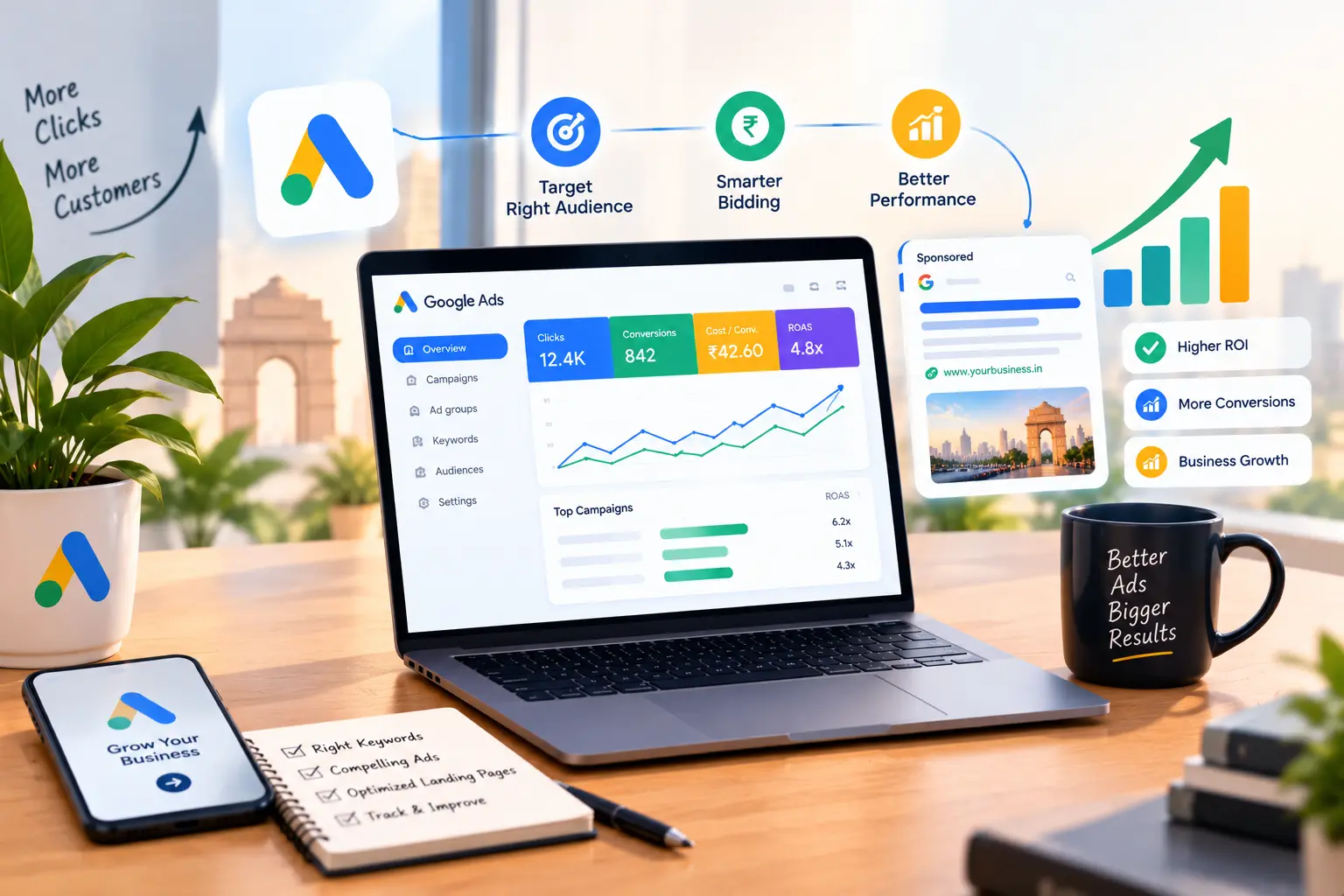
Learn practical, region-specific Google Ads strategies for Indian business owners to boost ROI, reduce waste, and optimize campaigns across platforms.
Introduction
Google Ads offers Indian small and medium businesses a powerful path to growth. When used strategically, it cuts through clutter, drives qualified traffic, and converts with measurable ROI. This guide focuses on practical, battle-tested tactics tailored for the Indian market, from budget discipline to audience-focused creativity.
Readying your foundation
Before launching campaigns, map your goals clearly. Do you want more leads, e-commerce sales, or app installs? Set a realistic monthly budget aligned with revenue targets. Establish conversion events that matter to your business and ensure your website is optimized for speed and mobile users, who dominate Indian online behavior.
Why Google Ads matters for Indian businesses
India’s digital landscape is dense and diverse. Google Ads lets you target tiered markets, languages, and devices with precision. It supports flexible bidding strategies, audience targeting, and local extensions that resonate with local buyers. The platform rewards relevance—better ads with strong landing pages tend to cost less and convert more.
Practical takeaway
Start with a small, tightly controlled pilot campaign in your core geography and language. Use it to learn what messages, keywords, and landing pages perform best before scaling.
Campaign structure that works
A clean architecture reduces wasted spend and makes optimization easier. Consider separating campaigns by product lines, geography, and device, then organizing ad groups around intent-driven keywords.
Core campaign types you should use
- Search campaigns for intent-driven queries near your sales funnel
- Shopping campaigns for e-commerce with product feed optimization
- Display campaigns for brand awareness and retargeting
- Video campaigns for awareness on YouTube, which is widely consumed in India
Practical takeaway
Limit initial keyword permutations. Start with 10–20 tightly themed keywords per ad group and 2–3 ad variants. This gives you faster signal for optimization without overwhelming the data.
Keyword strategy tailored to the Indian market
Keyword selection should balance intent with regional language usage. Use English and local languages (Hindi, Tamil, Telugu, Marathi, etc.) depending on your audience. Leverage long-tail keywords and audience-specific terms that Indians use in day-to-day searches.
Tips for better keyword performance
- Use negative keywords to exclude unrelated searches
- Incorporate location signals (city, state) where possible
- Prioritize high-intent phrases like “buy,” “online,” “near me,” or “best price”
Practical takeaway
Audit keywords monthly. Remove underperformers and reallocate budget to top performers or new variations that mirror user phrasing.
Ad copy that resonates with Indian buyers
Craft headlines and descriptions in a way that speaks to local needs and pragmatics. Use clear value statements, a strong call-to-action, and trust signals such as reviews or warranties when applicable.
Best practices for ad copy
- Highlight primary benefit within the first 60 characters
- Include a compelling offer or incentive relevant to the Indian market
- Use ad extensions (callouts, sitelinks, call extensions) to improve visibility
Practical takeaway
Test 2–3 variants per ad group focusing on different value propositions. Let data guide which message sticks with your audience.
Landing pages that convert
Traffic is useless without a landing page that converts. Ensure pages load quickly on mobile, present a single clear action, and align with the ad’s promise. Localized content and currency can improve trust and relevance.
Optimization checklist
- Fast page load (ideally under 3 seconds)
- Clear headline matching the ad copy
- Strong, low-friction form or checkout flow
- Trust signals: testimonials, regional endorsements, security badges
Practical takeaway
A/B test landing pages for headlines, forms, and CTAs. Small changes can yield meaningful lift when traffic is well-targeted.
Bidding and budget management
Smart bidding helps you maximize results with limited data. Start with a target CPA or ROAS strategy and adjust as you gather conversion data. Monitor frequency capping to avoid ad fatigue.
Practical tips
- Set a monthly cap and review weekly to reallocate underperforming spend
- Use seasonality adjustments during festive periods or sales events common in India (e.g., Diwali, weddings)
- Consider dayparting to focus on high-conversion hours
Practical takeaway
Automate your bidding where possible but maintain human oversight. Regularly review bid strategies alongside creative and landing page performance.
Measurement, attribution, and reporting
Accurate measurement is essential. Use Google Analytics 4 with enhanced e-commerce or goal-based events. Decide on attribution models that reflect your business reality, such as data-driven attribution, if available.
Practical takeaway
Create a simple dashboard (money in, leads, orders, CAC, ROAS) and review weekly. Sharpen the lens on the metrics that truly move the business.
Optimizing for long-term profitability
Scaling is not just about increasing spend; it’s about smarter spend. Expand profitable campaigns, pause underperformers, and continuously test creative and offers. Invest in quality score improvements: relevant keywords, compelling ad copy, and fast landing pages improve efficiency over time.
Quick wins
- Clean up exhausted ad groups and restructure around tighter themes
- Add high-intent negatives to prune wasteful traffic
- Invest in mobile-first experiences, given the mobile-centric Indian audience
Risks to watch out for
- Spiky budgets that burn out without visible returns
- Misaligned landing pages causing high bounce rates
- Over-segmentation leading to fragmented data and slow learning
Practical takeaway
Set guardrails and milestones. If cost-per-conversion spikes for two consecutive weeks, pause, review, and reallocate.
Conclusion
Google Ads can deliver strong ROI for Indian businesses when you start with clear goals, maintain tight campaign structure, and continuously optimize based on data. Focus on local relevance, mobile experiences, and disciplined budgeting to transform clicks into customers.
Takeaways
- Start small, learn fast, scale smart
- Use local language and regional targeting to expand reach
- Optimize landing pages and offers to improve conversions
- Measure with a simple, insightful dashboard and iterate