
Maximizing ROI with Google Search Ads in 2026
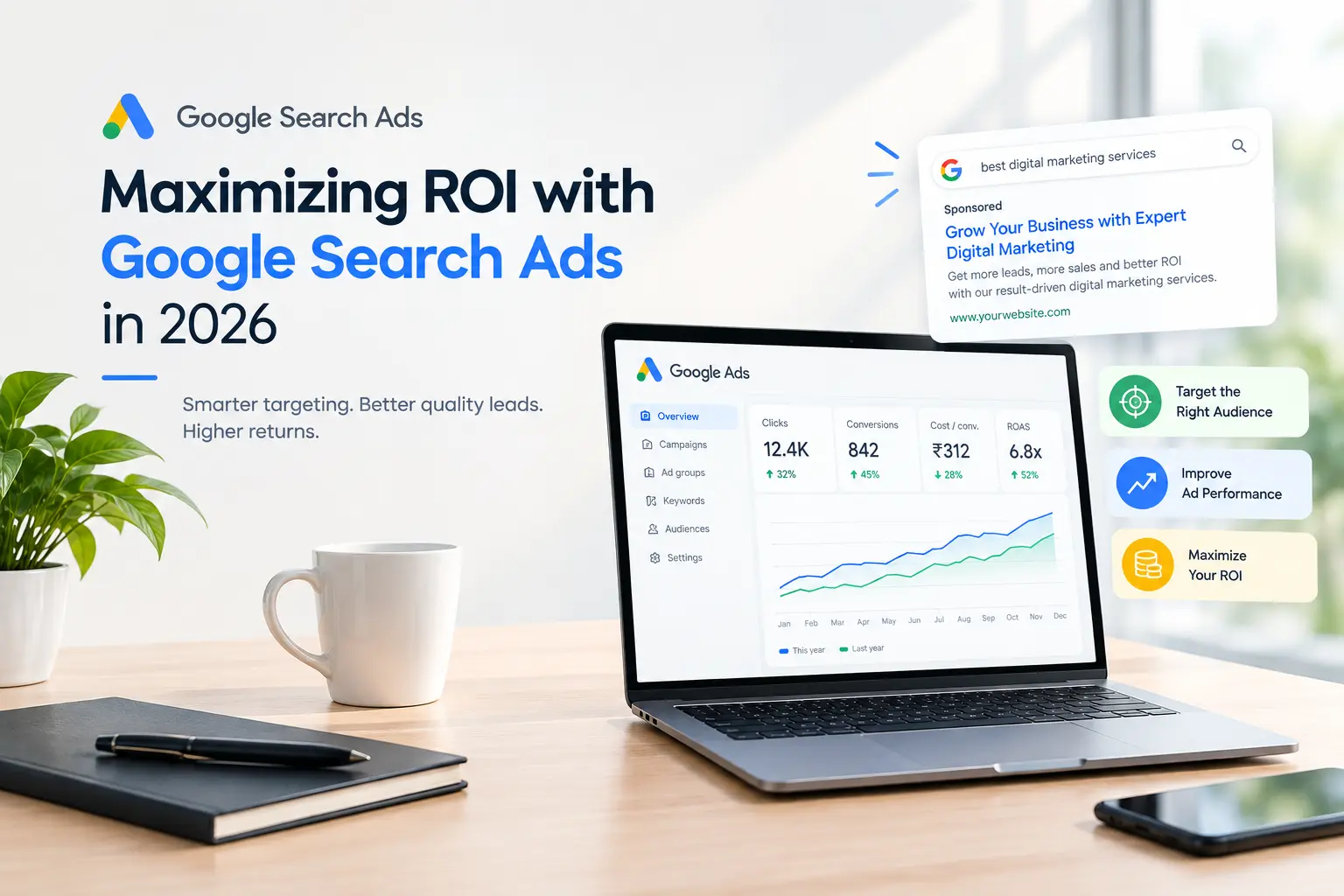
Unlock practical strategies to boost ROI with Google Search Ads, from keyword structure to bidding and measurement, tailored for Indian businesses.
Introduction
Google Search Ads remain one of the most cost-effective channels for Indian business owners to capture intent and drive meaningful sales. In 2026, with evolving auction dynamics and smarter automation, a disciplined approach can deliver outsized returns. This post outlines practical, ready-to-execute steps to maximise ROI across budget, creatives, bidding, and measurement.
1) Clarify objectives and segments
A clear objective helps you prioritise metrics and optimise accordingly. Start by defining goals such as lead generation, e-commerce orders, or showroom visits. Then segment your campaigns by product category, geo, and device. For example, separate campaigns for top-selling SKUs in major metros and a broader brand-awareness set in Tier 2 cities.
Practical takeaway
- Map each campaign to a specific objective (CPA, ROAS, or revenue).
- Create up to 3–5 ad groups per campaign focused on tightly themed keywords.
- Use location and device modifiers to tailor bids for the most profitable regions and devices.
2) Master keyword architecture
Keywords are the backbone of search advertising. Build a structure that balances breadth with relevance:
- Core keywords: high-intent terms directly tied to products or services.
- Long-tail modifiers: price, colour, size, location, or problem statements.
- Negative keywords: exclude terms that drain budget (free, jobs, offline, generic comparisons).
Practical takeaway
- Start with 15–25 high-intent core keywords per campaign and expand gradually.
- Use match types strategically: broad match for discovery with smart bidding, phrase and exact for control.
- Regularly prune underperforming terms and add new negatives weekly.
3) Craft compelling ads for Indian audiences
Your ad copy should speak to value, not just features. Highlight benefits, trusted signals, and calls to action relevant to Indian customers. Use local language variants sparingly if your market is bilingual, but ensure clarity and consistency across ads.
Practical takeaway
- Write 2–3 ad variations per ad group to test headlines, descriptions, and display paths.
- Emphasise ROI benefits (saves time, reduces cost per lead, increases conversions).
- Include a clear CTA aligned with the landing page objective.
4) Leverage bidding strategies and budget discipline
Smart bidding is essential. Start with Target CPA or Target ROAS depending on your data maturity. If you are new to Google Ads, rely on automated bidding while gathering conversion data.
Practical takeaway
- Set realistic start targets based on historical data; plan for a 2–4 week data collection phase.
- Use seasonality adjustments during peak sales periods (festivals, end of season).
- Allocate budgets to the best performing campaigns and pause underperformers quickly.
5) Optimize landing pages and user experience
A great click must convert. Ensure landing pages load fast on mobile, reflect the ad promise, and present a clear path to conversion. A/B test headlines, CTAs, forms, and imagery to deliver higher quality scores and improved conversions.
Practical takeaway
- Align landing page content with the ad group keywords.
- Remove friction: minimise fields, offer guest checkout, and provide trust signals.
- Use social proof and client logos for credibility in India-specific markets where it matters.
6) Measure what matters and close the loop
Tracking is non-negotiable. Ensure conversions tie back to revenue and cost per acquisition. Implement UTM tagging for all campaigns, and use Google Analytics 4 or your preferred analytics stack to attribute impact accurately.
Practical takeaway
- Define a measurement plan with primary and secondary metrics (conversion rate, CPA, ROAS, CAC).
- Set up conversion actions for form fills, calls, and purchases; attribute micro-conversions that indicate engagement.
- Regularly review attribution models and adjust as needed to reflect last-click or data-driven insights.
7) Automation, scripts, and integration
Automation can save time and improve results. Use rules and scripts to pause underperforming keywords, adjust budgets by performance, and schedule reports for stakeholders.
Practical takeaway
- Implement at least one rule for dayparting or bid adjustments on weekends.
- Use Google Ads scripts to automate repetitive tasks and data exports.
- Integrate your ads data with your CRM to close the loop on lead quality and sales attribution.
8) Compliance, privacy, and trust
Respect user privacy and comply with regional advertising regulations. Ensure your tracking respects consent, and avoid aggressive or deceptive tactics that harm brand trust.
Practical takeaway
- Review privacy policies and cookie consent processes with your legal team.
- Use transparent ad copy that accurately reflects products and services.
- Maintain clean data practices to support reliable optimization.
9) Practical playbook for a typical Indian SME
- Phase 1 (Weeks 1–2): Audits, keyword research, and campaign structure setup.
- Phase 2 (Weeks 3–5): Creative testing, bid strategy validation, and landing page improvements.
- Phase 3 (Weeks 6+): Scale winners, refine audience signals, and deepen measurement.
Practical takeaway
- Prioritise high-intent terms first and gradually expand as data accrues.
- Schedule monthly reviews with a clear action list and owners.
- Always tie back to business outcomes, not vanity metrics.
Conclusion
Google Search Ads can yield strong ROI for Indian businesses when you combine a solid structure, relevant messaging, disciplined bidding, and rigorous measurement. Start with a clear objective, build a scalable keyword and ad strategy, and continuously optimise based on data. With patience and discipline, your campaigns will deliver sustainable growth.