
Web Designing for Growth: Practical Guide for Indian Businesses
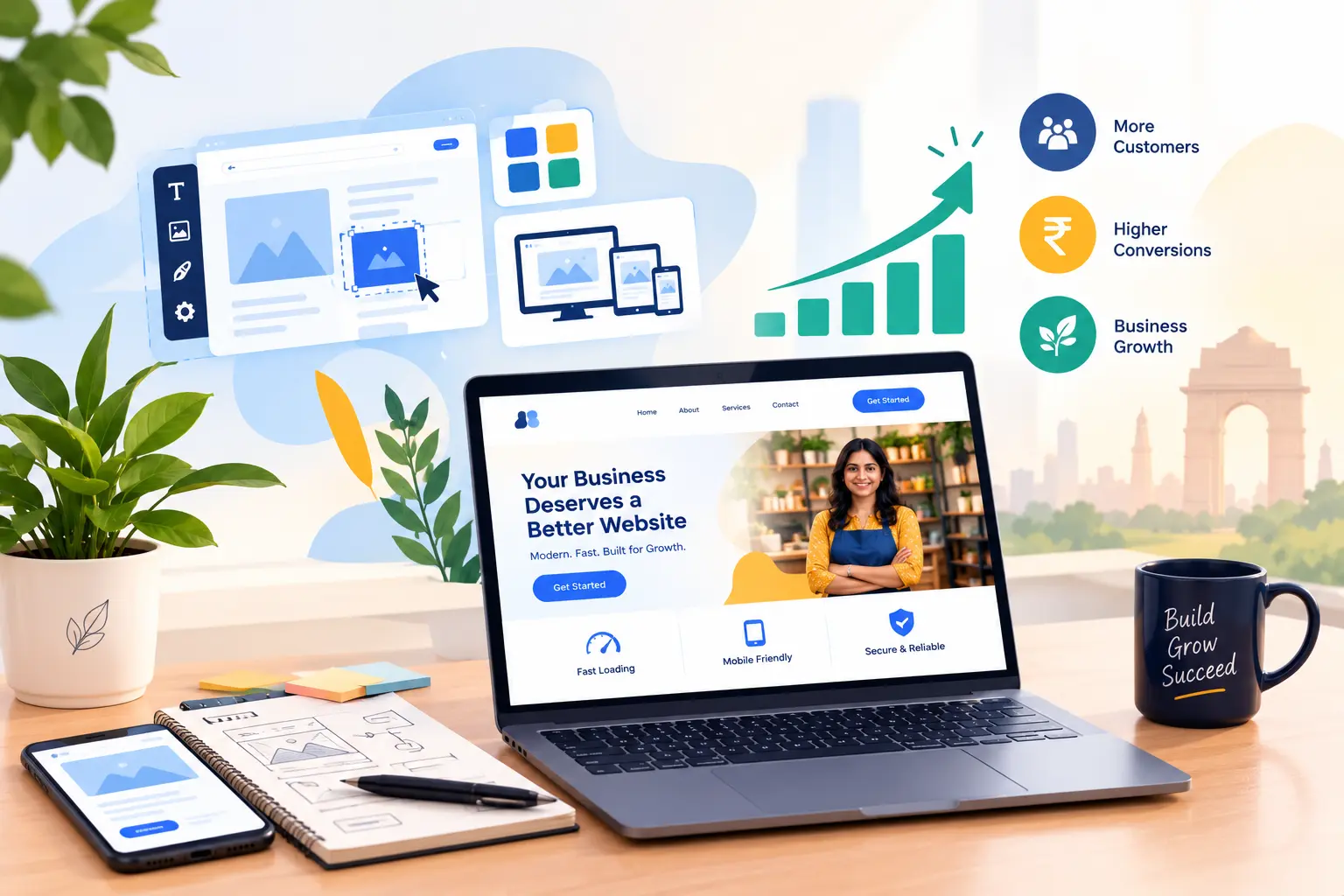
Master modern web design with user-first layouts, accessibility, performance, and conversion-focused elements tailored for Indian businesses and decision-makers.
Introduction
In today’s competitive market, a well-crafted website is a powerful business asset. For Indian businesses and decision-makers, effective web design combines user-centric layouts with performance, accessibility, and conversions. This guide shares practical, actionable strategies you can implement without a full redesign, helping you drive engagement and growth.
The Web Designing Landscape in 2026
Web design is no longer about aesthetics alone. Users expect fast loading times, intuitive navigation, and content that speaks to local needs. On mobile devices—where many customers access websites—fast, responsive experiences are non-negotiable. Furthermore, accessibility and inclusive design broaden your reach, ensuring everyone can interact with your site with ease. For business owners, a thoughtful design translates into higher conversions, better SEO, and stronger brand trust.
Key Principles for Indian Markets
User Experience
The user journey should be simple and intuitive. Start by identifying the core actions you want visitors to take—consulting, purchasing, or subscribing—and design around those goals. Use clear CTAs, legible typography, and consistent navigation. Localize content to reflect Indian sensibilities, languages, and call-to-action phrasing that resonates with your audience.
Visual Design
Visual hierarchy matters. Emphasize value propositions with concise headlines, supportive imagery, and white space that guides attention. Use a color palette that aligns with your brand and avoids visual clutter. Consider typographic systems that remain legible across devices and ages.
Accessibility
Inclusive design expands your reach. Ensure text alternatives for images, proper contrast ratios, and keyboard-friendly navigation. Use semantic HTML and ARIA roles where appropriate. Accessibility is not a feature; it is a standard that improves SEO, usability, and compliance across markets.
Performance
Speed is a competitive edge. Compress images, adopt modern formats (such as WebP), implement lazy loading for offscreen content, and minimize render-blocking resources. A fast site reduces bounce rates and improves conversion rates, especially for mobile users on slower networks.
Mobile-First Approach
In many Indian markets, mobile devices are the primary access point. Design for small screens first, then progressively enhance for larger devices. Touch-friendly controls, readable font sizes, and easy form inputs are essential.
Content Strategy
Content should be clear, concise, and locally relevant. Use Indian English nuances where appropriate and consider multilingual support if your audience spans regions with different languages. Ensure product or service benefits are explained early, with concrete examples or case studies where possible.
Practical Guidelines to Implement Today
- Audit your homepage: Is the value proposition immediately clear? Do CTAs stand out? Optimize the hero section for impact.
- Simplify navigation: Limit top-level menu items to a handful; use clear labels and a predictable structure.
- Optimize images: Resize to display size, serve WebP where possible, and use responsive images with meaningful alt text.
- Improve forms: Use auto-complete, inline validation, and lightweight fields to reduce friction.
- Build a design system: Create reusable components (buttons, forms, cards) to ensure consistency and speed up development.
- Prioritize accessibility: Check color contrast, keyboard focus states, and logical reading order.
- Track conversions: Implement analytics to measure user journeys and identify drop-offs for targeted improvements.
- Localize content: Adapt language, examples, and case studies to reflect Indian contexts and industries.
Case Study: A Small E-commerce Brand
A mid-sized Indian fashion retailer updated its product pages with a mobile-first layout, improved image optimization, and clearer CTAs. Within eight weeks, mobile conversions rose by 18%, bounce rate dropped, and average session duration increased. The key was simplifying the user path and ensuring fast load times on common networks.
Tools and Resources
- Design systems: Figma libraries, component catalogs.
- Accessibility testing: WAVE, Lighthouse accessibility audits.
- Performance: Lighthouse, WebPageTest, and image optimization tools.
- Analytics: Google Analytics 4, enhanced ecommerce tracking.
Practical Takeaways
- Start with a clear value proposition above the fold and visible CTAs.
- Design for mobile first; test across devices and network conditions common in India.
- Use a design system to maintain consistency and speed up production.
- Prioritize accessibility and performance; they improve both user experience and SEO.
- Localize content thoughtfully to reflect regional audiences and markets.
Conclusion
Web design today is a strategic business function. For Indian businesses, success hinges on fast, accessible, user-friendly experiences that respect local context. By focusing on user experience, performance, and mobile-first design, you can create sites that engage visitors, convert them into customers, and fuel growth.
Takeaway Checklist
- [ ] Value proposition visible at first glance
- [ ] Mobile-first design implemented
- [ ] Performance optimizations in place
- [ ] Accessible and navigable interface
- [ ] Localized content and language considerations
Read Time: 7 min